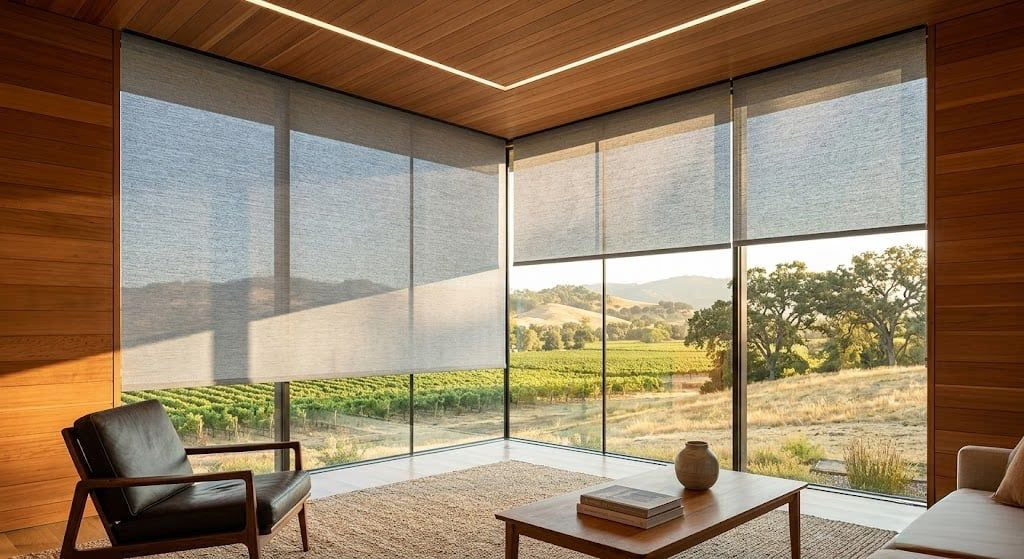
Dry Creek Valley Prairie Modernism - UV Protection for Cantilevered Glass Estates
Prairie modernist estates in Dry Creek Valley feature cantilevered glass-lined rooms that expose Western red cedar interiors, wine collections, and art to UV radiation on three or more sides simultaneously. Discount Best Blinds and Shutters specifies 99% UV-blocking solar shades with sub-25 dBA premium motorization for these architecturally demanding properties, protecting irreplaceable interior materials while preserving the transparency that defines Dry Creek Valley's vineyard estate architecture.
Dry Creek Valley's AVA (American Viticultural Area) has become a proving ground for prairie modernist residential design, with firms like Surround Architecture and Shawback Design creating homes that dissolve the boundary between interior living spaces and the vineyard landscape through cantilevered glass volumes, structural glazing systems, and floor-to-ceiling curtain walls. These architectural expressions demand shade systems that perform at a technical level - blocking 99% of UV radiation, rejecting infrared heat gain that threatens glass-wrapped wine cellars, and operating invisibly within the building's material palette of cedar, steel, and stone.
Cantilevered Glass and the Multi-Directional UV Problem
Cantilevered glass rooms extend beyond the building footprint, creating volumes enclosed by glass on three or more sides. In Dry Creek Valley's west-facing vineyard orientation, these rooms receive direct UV exposure from south, west, and overhead simultaneously during afternoon hours. Standard single-wall UV calculations underestimate the total dosage by 60 to 80 percent because they account for only one exposure direction. The cumulative UV load in a cantilevered tasting room can match the damage potential of direct outdoor exposure over the course of a year.
The materials at risk are the most expensive elements in the home. Western red cedar ceiling planks and wall cladding represent significant architectural investment - UV photodegradation causes graying, oil loss, and surface checking within 6 to 12 months of unprotected exposure. Wine collections stored in glass-walled tasting rooms face UV-accelerated tannin breakdown and color compound bleaching. Fine art, textile upholstery, and hardwood flooring all suffer irreversible damage from sustained UV transmission through architectural glass. The UV protection solution must cover every glass surface in the cantilevered volume, not just the primary window wall.
Stabilized Thermal Sanctuaries for Wine and Living
Glass-wrapped wine cellars in Dry Creek Valley estates require temperature stability at 55°F with minimal fluctuation. Infrared heat gain through unshaded glass creates thermal spikes that overwhelm cellar cooling systems and cause chemical instability in stored wine. Solar shades with SHGC values of 0.12 reject the majority of infrared energy before it enters the glass cavity, reducing the thermal load on climate control systems by 40 to 50 percent. For cellars with precision thermal sensors, motorized shades deploy automatically when glass-surface temperatures rise above a configurable threshold, maintaining the stable 55°F environment that protects label-worthy vintages.
The same precision applies to living spaces where Western red cedar interiors and art collections demand controlled UV and thermal conditions. Duette Architella triple-cell shades provide R-7.0 insulation that stabilizes interior temperatures regardless of exterior conditions, reducing the wide temperature swings that characterize Dry Creek Valley's continental microclimate - summer highs above 105°F and winter lows in the low 30s. The combined system of solar shades for UV and heat rejection plus cellular insulation for thermal stability creates the “stabilized thermal sanctuary” that these properties require.
Dry Creek Valley Prairie Modernism Specifications
| Feature | Value | Notes |
|---|---|---|
| UV Blocking | 99% at 1% openness | Blocks 280–400nm wavelengths that degrade cedar and wine |
| VLT (Visible Light Transmission) | 1–14% selectable | Preserves vineyard views while filtering UV |
| R-Value (Thermal) | R-7.0 (Architella Triple) | Climate control for glass-wrapped wine cellars |
| Combined U-Factor | 0.23 | Title 24 2026 compliant assembly |
| SHGC (West-Facing) | 0.12 | Maximum solar heat rejection for afternoon vineyard exposure |
| Motor Noise | Sub-25 dBA | Below ambient for tasting room and cellar environments |
| Glass Compatibility | Fixed, sliding, cantilevered | Including structural glazing and curtain wall systems |
| Fabric | Hartmann and Forbes · Conrad · Solar | Natural fiber and technical solar options |
Dry Creek Valley Window Treatment Questions
Why do Dry Creek Valley cantilevered glass rooms require specialized UV protection?
Cantilevered glass rooms extend beyond the building’s structural footprint, creating glass-wrapped volumes that receive sun exposure on three or more sides simultaneously. In Dry Creek Valley’s AVA, these rooms often function as wine tasting spaces, entertaining lounges, or gallery spaces housing art collections. UV radiation at 280 to 400 nanometers penetrates standard Low-E glass and causes photochemical degradation of Western red cedar finishes, wine bottle contents, textile upholstery, and fine art. The multi-directional exposure of cantilevered construction means UV damage occurs faster than in conventional rooms with single-wall window exposure. Discount Best Blinds and Shutters specifies 99% UV-blocking solar shades on all glass surfaces of cantilevered volumes, including the floor-to-ceiling end walls that receive the most intense afternoon exposure in the Dry Creek corridor.
How does UV radiation damage Western red cedar interiors?
Western red cedar contains natural oils and tannins that give the wood its characteristic warm color and aromatic properties. UV radiation between 280 and 400 nanometers breaks down these compounds through photodegradation, causing the wood to gray, lose its natural oils, and develop surface checking. In Dry Creek Valley homes where Western red cedar is used for ceiling planks, wall cladding, and cabinetry, unfiltered UV exposure through glass walls can cause visible color change within 6 to 12 months and structural surface damage within 2 to 3 years. Solar shades with 1% openness block 99% of UV transmission while maintaining visual transparency, preserving the cedar’s natural patina indefinitely.
Can window treatments protect glass-wrapped wine cellars from infrared heat gain?
Yes. Glass-wrapped wine cellars in Dry Creek Valley estates face a dual threat: UV radiation that degrades wine chemistry and infrared heat gain that raises cellar temperatures above the 55°F optimal storage threshold. Solar shades with low SHGC values (0.12 at 1% openness) reject the majority of infrared radiation before it passes through the glass, reducing the cooling load on the cellar’s climate control system. For cellars with precision thermal sensors, motorized shades can be triggered by temperature thresholds - deploying automatically when glass-surface temperatures rise above a set point and retracting when temperatures normalize. This automated approach prevents thermal spikes that cause chemical instability in stored wine.
What shade fabrics complement the prairie modernist aesthetic?
Prairie modernism in Dry Creek Valley emphasizes horizontal lines, natural materials, and transparency. Shade fabrics must complement this vocabulary without introducing visual clutter. Hartmann and Forbes hand-woven natural fiber shades in bamboo and jute provide organic texture that harmonizes with Western red cedar and stone. For high-UV glass walls, Conrad Original solar fabrics offer flat-weave textures in earth-toned neutrals that read as material surfaces rather than window dressings. Both lines are fabricated for large-format motorized applications and integrate with Lutron Palladiom systems for concealed operation. Discount Best Blinds and Shutters brings fabric samples from both collections to every Dry Creek Valley consultation to ensure the selected material resonates with the home’s material palette.
Explore More Solutions
UV Protection
99% UV blocking for art, wine, and interior materials.
Dry Creek Valley Service Area
Dedicated services for Dry Creek Valley vineyard estates.
Wine Cellar
Specialist UV protection and viticultural preservation for glass-walled cellars.
Hartmann and Forbes
Natural fiber shades for prairie modernist material palettes.
Architectural Glass
Floor-to-ceiling solutions with invisible recessed mounting.
Title 24 Compliance
U-factor and SHGC compliance for vineyard new construction.
Protect Your Dry Creek Valley Investment
Phil D. Skikos brings UV meters, fabric samples, and specification expertise to every Dry Creek Valley consultation. We assess every glass surface for UV dosage, calculate thermal load reduction, and specify shade systems that protect Western red cedar, wine collections, and art while preserving the vineyard views that define your home.