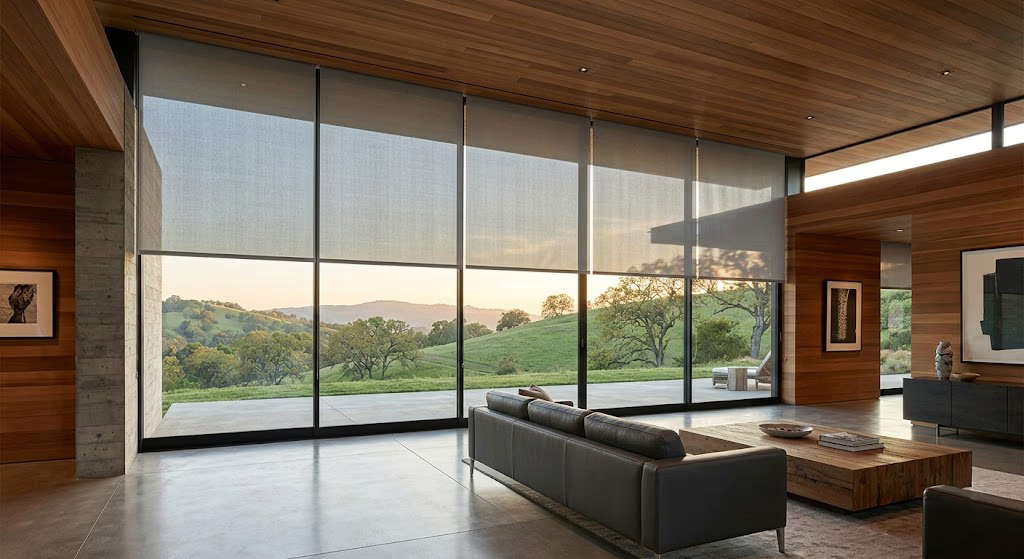
Architectural Glass Solutions for Oversized Windows
Architectural glass wall solutions address the challenge of covering floor-to-ceiling windows and oversized glass expanses in modern residences. Motorized shade systems with invisible recessed headrail pockets maintain clean sightlines while providing UV protection and thermal control. Discount Best Blinds and Shutters serves Sonoma County architects and builders.
Invisible recessed headrail pockets allow motorized shades to disappear entirely into the ceiling cavity, preserving the architect's clean sightlines when treatments are retracted. For contemporary homes in Healdsburg's Mill District, we install Luminette® Privacy Sheers and motorized roller systems on these concealed tracks, spanning openings up to 192 inches wide with no visible hardware - preserving the design intent while providing full light control, privacy, and thermal management on demand.
The Mill District Challenge
Modern architecture in Healdsburg's Mill District and surrounding wine country neighborhoods is defined by expansive glass. Firms like Olson Kundig and Strening Architects design homes with floor-to-ceiling glass walls that dissolve the boundary between interior living spaces and the Sonoma County landscape. These walls are the defining feature of the home. They are also the source of its biggest comfort challenges: intense solar glare during afternoon hours, significant heat gain that strains HVAC systems, compromised privacy from neighboring properties, and UV exposure that damages interior furnishings, hardwood floors, and art collections.
Standard off-the-shelf window treatments cannot address these problems at scale. The openings are too wide, the ceilings too tall, and the architectural intent too deliberate for conventional solutions. Bulky valances, visible tracks, and dangling cords contradict the clean lines that define contemporary design. The window treatment system must perform at an architectural level: spanning enormous openings, disappearing completely when not in use, and operating silently on demand.
Invisible Recessed Mounting
Ceiling-recessed pocket systems are the gold standard for architectural glass installations. A pocket is built into the ceiling framing above each window opening, creating a concealed cavity that houses the shade roller, motor, and mounting hardware. When the shade is retracted, it rolls up into the pocket and disappears completely. There is no visible fascia, no exposed track, and no indication that a window treatment exists until it is deployed.
This approach requires coordination during the construction phase. The pocket dimensions must be specified before drywall is installed so the framer can build the cavity to the correct depth and width. We work directly with general contractors during the framing stage to provide detailed pocket specifications, route low-voltage power for hardwired motors, and install any structural blocking required for large-span shade assemblies. For retrofit projects where recessed pockets are not feasible, we specify minimal-profile surface-mount brackets that sit as close to the ceiling plane as possible.
Solutions for Sliding Glass Walls
Multi-panel sliding glass wall systems from NanaWall, Western Window Systems, and similar manufacturers present a unique challenge. These walls open completely to merge indoor and outdoor living, but when closed they create unbroken glass expanses that can span 20 feet or more. The window treatment must cover the full opening on a single track without center supports or gaps, and it must stack compactly enough to allow the glass panels to operate freely.
Luminette® Privacy Sheers are purpose-built for this application, spanning openings up to 192 inches wide on a single headrail. The sheer fabric vanes rotate to control light and privacy without retracting the entire treatment, preserving the sense of openness. For clients who prefer a layered approach, motorized dual-roller systems mount two independent shade fabrics on a single bracket: a 3% openness solar screen for daytime glare reduction that maintains the view, and a blackout roller for complete privacy and light elimination. Both layers operate independently via motorization, giving homeowners precise control over every combination of light, view, and privacy throughout the day.
Motorization for Architectural Glazing
Large-format glass installations demand a motor system that is powerful enough to drive wide, heavy shade fabrics yet quiet enough for open-plan living. The Lutron Palladiom is the motor we specify for these projects. It operates at just 35 dBA - roughly the volume of a whisper - and delivers smooth, consistent motion across spans up to 192 inches. Palladiom motors are hardwired for continuous power, eliminating the battery replacement cycles that become impractical when you have dozens of motorized zones in a single home.
Integration with whole-home automation platforms is standard. Palladiom systems connect natively to Lutron's RadioRA 3 and HomeWorks QSX processors, and they integrate with Savant, Control4, and Crestron through certified drivers. This means your architectural shades become part of the same control ecosystem as your lighting, climate, and audio systems. Automated sun-tracking schedules adjust shade positions throughout the day based on the sun's actual position relative to each window, reducing glare and heat gain without manual intervention. A single tap on a Savant touchscreen or a voice command can activate a scene that adjusts every shade in the house simultaneously. Explore our full range of motorizable window treatment products to find the right fabric and style for your architectural glazing project.
Architectural Glass Specifications
| Feature | Value | Notes |
|---|---|---|
| Max Span | Up to 192" per single unit | Luminette Privacy Sheers |
| Motor Noise | 35 dBA (Lutron Palladiom) | Whisper-quiet operation |
| Mounting | Surface, ceiling recessed, pocket | Invisible when retracted |
| Integration | Lutron, Savant, Control4, Crestron | Full smart home compatibility |
| Glass Types Supported | Fixed, sliding, bi-fold, pivot | Including NanaWall systems |
| UV Protection | Up to 99% with solar fabrics | Preserves views |
| Power | Hardwired (recommended), battery, solar | Hardwired for reliability |
In the Field: Mill District Contemporary
We designed the complete window treatment system for a new-construction 4,800 square foot Mill District home (ZIP 95448) by Strening Architects. The project featured 14 floor-to-ceiling glass panels averaging 10 feet tall and a 28-foot NanaWall sliding glass system opening to the pool terrace. We coordinated with the general contractor during framing to install recessed ceiling pockets for Lutron Palladiom-driven roller shades. The system includes dual-layer motorized shades: a 3% openness solar fabric for daytime glare reduction and a blackout layer for home theater mode. Total integration: 22 motorized zones controlled via Savant.
Frequently Asked Questions About Architectural Glass Solutions
Can shades be completely hidden when open?
Yes. Recessed ceiling pockets allow motorized shades to roll up and disappear entirely into the ceiling cavity when retracted. The pocket is framed during construction and finished with drywall so there is no visible hardware, track, or fascia. When the shades are open, your glass walls look exactly as the architect intended. We coordinate pocket dimensions and placement with your general contractor during the framing stage to ensure a seamless result.
What motor system is quietest for large windows?
The Lutron Palladiom motor operates at just 35 dBA, which is roughly the volume of a whisper. It is specifically engineered for large-format architectural installations where noise would be intrusive. Palladiom motors are hardwired for continuous power and can drive shades spanning up to 192 inches wide without gear noise or vibration. For homes with open floor plans and floor-to-ceiling glass, this is the motor system we recommend.
When should I plan window treatments for new construction?
The ideal time is during the framing stage, before drywall is installed. Recessed ceiling pockets need to be built into the framing so the shade housing sits flush with the finished ceiling. We work directly with your general contractor and architect to specify pocket dimensions, power routing for hardwired motors, and any structural blocking required for large-span installations. Planning at this stage avoids costly retrofits and ensures a clean, invisible result.
Can sliding glass wall systems be automated?
Yes. Multi-panel sliding glass walls from NanaWall, Western Window Systems, and similar manufacturers can be paired with motorized window treatments. Luminette Privacy Sheers span openings up to 192 inches wide on a single track, covering the full width of a typical sliding glass wall. Motorized dual-roller systems provide layered control with a solar screen for daytime glare and a blackout shade for full privacy. Both options integrate with Lutron, Savant, and Control4 for automated scheduling.
Explore More Solutions and Products
Smart Home Automation
Lutron Palladiom, PowerView Gen 3, and Savant integration for whole-home motorized shade control.
UV Protection
Protect hardwood floors, art collections, and furnishings from UV damage with solar fabrics rated up to 99% UV block.
Circadian Wellness
Automated shade scheduling aligned with your circadian rhythm for healthier sleep and natural light cycles.
Mill District Service Area
Dedicated window treatment services for The Mill District's contemporary luxury residences in Healdsburg.
Pirouette and Luminette
Luxury sheers that span wide openings with rotating fabric vanes for precise light and privacy control.
Conrad Original
The gold standard in architectural roller shades, specified by architects and interior designers for high-end projects.
Ready to Solve Your Architectural Glass Challenge?
Owner Phil D. Skikos brings fabric samples, motor demonstrations, and recessed pocket specifications directly to your home, office, or construction site. Whether you are in the design phase or retrofitting an existing home, we will create a window treatment plan that respects your architecture.