Wine Cellar Window Treatments - UV Protection and Viticultural Preservation
Sonoma County wine cellars face unique UV and thermal challenges that standard window treatments cannot address. Collections valued at tens of thousands of dollars are threatened by 280–400nm radiation that degrades tannins, fades labels, and accelerates cork deterioration. Discount Best Blinds and Shutters specifies shades with SHGC 0.17 thermal stability and 99%+ UV rejection paired with RadioRA 3 climate sensor integration for wine storage environments throughout Healdsburg, Dry Creek Valley, and Sonoma County.
Why Do Wine Cellars Demand Specialist UV Management?
UV radiation in the 280 to 400 nanometer wavelength range directly attacks tannin molecules, accelerates cork degradation, and fades the labels that document provenance and collection value. Sonoma County's 2,800+ annual sunshine hours and the prevalence of western-exposure cellar walls in modern wine country architecture create sustained UV loading that can measurably degrade wine chemistry within weeks of unprotected exposure.
Infrared heat gain through unshaded glass disrupts the 55°F storage equilibrium required for proper wine aging, where even small temperature fluctuations accelerate chemical reactions that destroy tannin structure and aromatic complexity. Thermal cycling damages even temperature-controlled cellars when solar gain overwhelms HVAC capacity, forcing cooling systems into aggressive cycling patterns that increase energy consumption and create the very temperature instability they are designed to prevent. Title 24 compliance adds regulatory pressure: cooling systems running outside demand response protocols during peak energy periods can trigger penalties exceeding $2,000 per day, making thermal management through window treatments both a preservation strategy and a financial imperative.
Recommended Products for Wine Cellars
Designer Solar Shades - SHGC 0.17 UV Rejection
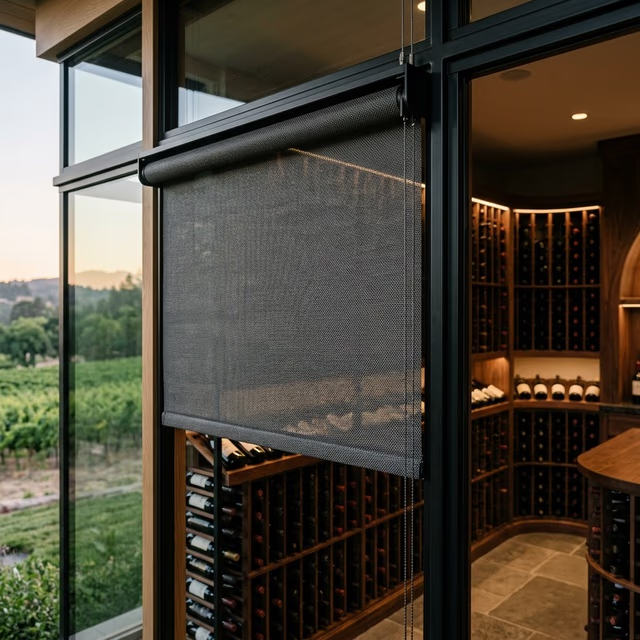
Solar shades with 1 to 3 percent openness fabric preserve art-gallery transparency between living spaces and wine collections while blocking 99% or more of UV radiation across the full 280 to 400 nanometer harmful spectrum. The tight weave prevents tannin-degrading UV energy from reaching stored bottles while maintaining the visual connection to the collection that glass-walled cellar architecture is designed to provide. At SHGC 0.17, these shades reject 83% of solar heat gain, preventing infrared thermal loading that disrupts the 55°F storage equilibrium critical for proper wine aging.
Duette Architella Honeycomb - R-7.0 Thermal Stability
Double-cell honeycomb construction creates a dead-air insulation barrier that stabilizes cellar temperature regardless of exterior conditions. The R-7.0 thermal resistance rating delivers the highest insulation performance available in a window treatment, preventing heat transfer through glass walls that would otherwise force climate control systems into aggressive cycling. With a U-factor of 0.23, Architella shades minimize conductive heat loss during winter months and solar heat gain during summer, maintaining the narrow temperature band that wine collections require for proper long-term aging.
Skyline® Gliding Panels - Glass-Walled Cellars
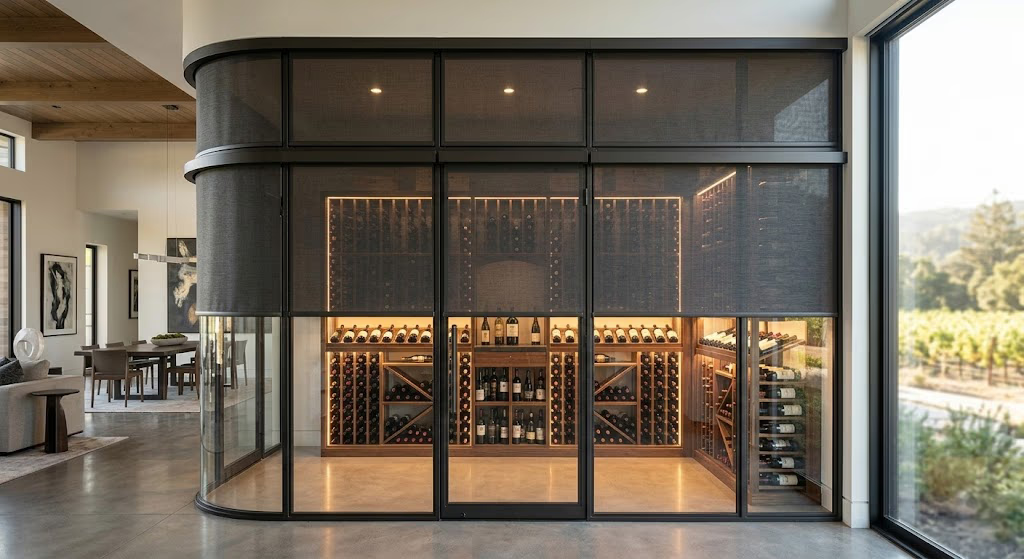
Skyline Gliding Panels cover openings up to 192 inches wide, addressing the floor-to-ceiling glass walls common in modern wine cellar architecture throughout Dry Creek Valley and Healdsburg. The horizontal traverse design preserves vineyard views when panels are stacked in their retracted position, then deploys smoothly across the full glass expanse to block UV and thermal gain during peak solar hours. Available in UV-filtering solar fabrics with 1 to 3 percent openness factors, Skyline panels provide the commercial-scale coverage that individual roller shades cannot achieve across continuous glass walls in pavilion-style cellar designs.
Designer's Note
Stabilized Thermal Sanctuaries for Wine Country Architecture
Sonoma County wine country has embraced glass-walled cellar architecture- from Aperture Cellars' lens-inspired tasting pavilion to Dry Creek Valley's prairie modern estates with cantilevered glass volumes that frame vineyard landscapes while housing serious wine collections.
These spaces require what we call stabilized thermal sanctuaries - shade systems that block UV degradation while maintaining the visual connection between wine collection and vineyard landscape that defines the architectural intent. RadioRA 3 with temperature and humidity sensors automates shade positioning based on real-time solar gain data, deploying UV protection precisely when environmental conditions threaten collection integrity and retracting when conditions allow natural light to illuminate the cellar for viewing and entertaining. OpenADR 2.0b demand response protocols coordinate shade deployment with cooling system operation, helping maintain Title 24 compliance for HVAC systems that run continuously in wine storage environments. Discount Best Blinds and Shutters specifies this integrated approach for every wine cellar installation because passive UV and thermal management through intelligent shade automation reduces the burden on mechanical cooling systems while delivering the preservation performance that serious Sonoma County wine collections demand.
Wine Cellar Performance Specifications
| Feature | Value | Notes |
|---|---|---|
| UV Blocking | 99%+ (280–400nm) | Prevents tannin degradation and label fading |
| SHGC | 0.17 | Rejects 83% of solar heat gain for temperature stability |
| R-Value | Up to 7.0 (Architella) | Thermal insulation for 55°F wine storage environments |
| Integration | RadioRA 3 · OpenADR 2.0b | Climate sensor automation with demand response |
| Max Width | Up to 192″ | Skyline Gliding Panels for glass-walled cellars |
| Fabric Openness | 1–3% | Art-gallery transparency while blocking UV |
| Motor Noise | Sub-35 dBA | Lutron Palladiom whisper-quiet operation |
Wine Cellar Window Treatment Questions Answered
How does UV radiation damage wine collections?
UV radiation in the 280 to 400 nanometer wavelength range directly attacks tannin molecules in wine, breaking down the polyphenolic compounds responsible for structure, mouthfeel, and aging potential. Prolonged UV exposure accelerates premature aging of cork seals by degrading the suberin and lignin that maintain the airtight barrier between wine and atmosphere, leading to oxidation and spoilage. Label fading from UV photodegradation destroys provenance documentation critical for collection valuation and resale. In Sonoma County wine cellars with western sun exposure, unfiltered afternoon light delivers concentrated UV energy that can measurably degrade wine chemistry within weeks. Shades specified at SHGC 0.17 reject 83% of solar heat gain while blocking 99% or more of the full 280 to 400 nanometer UV spectrum, protecting both the wine and the cellar environment from thermal instability.
What SHGC rating do wine cellar shades need?
Wine cellars require shades with a Solar Heat Gain Coefficient of 0.17 or lower to maintain the 55 degree Fahrenheit storage temperature stability essential for proper wine aging. At SHGC 0.17, window treatments reject 83% of solar thermal energy before it enters the cellar, preventing infrared heat gain that disrupts the delicate wine chemistry governing tannin polymerization, ester development, and bouquet evolution. Without adequate SHGC performance, solar gain through glass walls forces climate control systems to cycle more aggressively, creating temperature fluctuations that accelerate wine deterioration and dramatically increase energy costs. In Sonoma County, where afternoon sun angles drive intense thermal loading on west-facing cellar glass, SHGC 0.17 specification is the minimum performance threshold Discount Best Blinds and Shutters recommends for serious wine storage environments.
Can wine cellar shades integrate with climate sensors?
Yes. RadioRA 3 integrates natively with temperature and humidity sensors that trigger automated shade positioning based on real-time environmental data inside the cellar. When sensors detect rising temperature or solar gain approaching the cellar envelope, RadioRA 3 deploys shades to their UV-blocking position without manual intervention. OpenADR 2.0b demand response protocols allow the shade system to coordinate with cooling equipment during peak energy periods, helping maintain Title 24 compliance for HVAC systems that run continuously in wine storage environments. Scheduled UV blocking during peak solar gain windows from 11 AM to 3 PM provides consistent protection during the hours when UV intensity and thermal loading are highest, while retaining the option for manual override when cellar access or viewing is desired.
What window treatments work for glass-walled wine cellars?
Glass-walled wine cellars require window treatments that span large openings while delivering specification-grade UV and thermal performance. Skyline Gliding Panels cover openings up to 192 inches wide, providing full coverage for the floor-to-ceiling glass walls common in modern cellar architecture throughout Dry Creek Valley and Healdsburg. Designer Solar Shades with 1 to 3 percent openness fabric deliver art-gallery transparency that maintains visual connection to the wine collection from adjacent living spaces while blocking 99% or more of UV radiation across the full harmful spectrum. For cellars requiring maximum thermal insulation, Duette Architella honeycomb shades provide R-7.0 thermal resistance through their double-cell construction, creating a dead-air insulation barrier that stabilizes cellar temperature regardless of exterior conditions. Discount Best Blinds and Shutters frequently combines these products in glass pavilion cellars where different glass orientations require different performance priorities.
Related Products and Solutions
Protect Your Wine Collection
Phil D. Skikos designs specialist UV protection systems for Sonoma County wine cellars - from Dry Creek Valley glass pavilions to Healdsburg residential collections. Schedule your complimentary on-site assessment.