Custom Window Treatments for Dry Creek Valley Estates
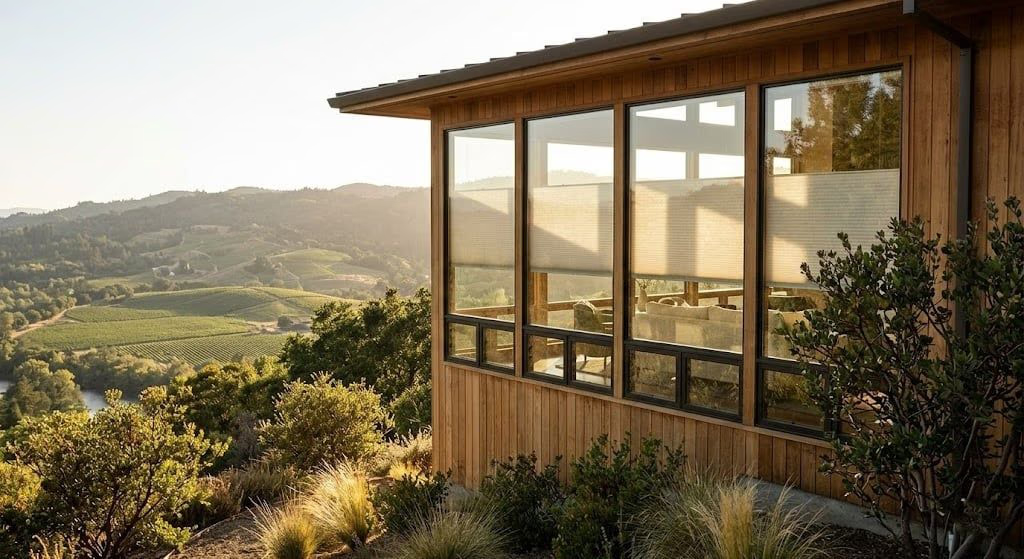
Discount Best Blinds and Shutters serves Dry Creek Valley vineyard estates in Healdsburg, CA 95448, with UV-filtering solar shades that block 99 percent of harmful rays to protect fine art, wine collections, and exotic hardwood flooring.
Dry Creek Valley - established as an American Viticultural Area on August 4, 1983, the nation's 34th AVA - stretches 16 miles long and 2 miles wide with approximately 9,000 acres of vineyard and over 70 resident wineries producing Sonoma County's most celebrated Zinfandel. Vineyard estates here range from $2.5M to $15M+ across ZIP codes 95448 (Healdsburg) and 95441 (Geyserville), combining working vineyards with luxury residences on properties of 3 to 36+ acres. South- and west-facing windows capture sweeping views of the valley floor, Zinfandel hillside vineyards, and the surrounding ridgelines - but that same exposure creates intense afternoon sun that threatens interiors year-round. Discount Best Blinds and Shutters serves Healdsburg and the entire Dry Creek Valley appellation with custom solar shades, motorized window systems, and dual-shade installations engineered to protect wine country interiors without sacrificing the views that define this extraordinary landscape.
How Do You Protect Vineyard Estate Interiors from UV Damage?
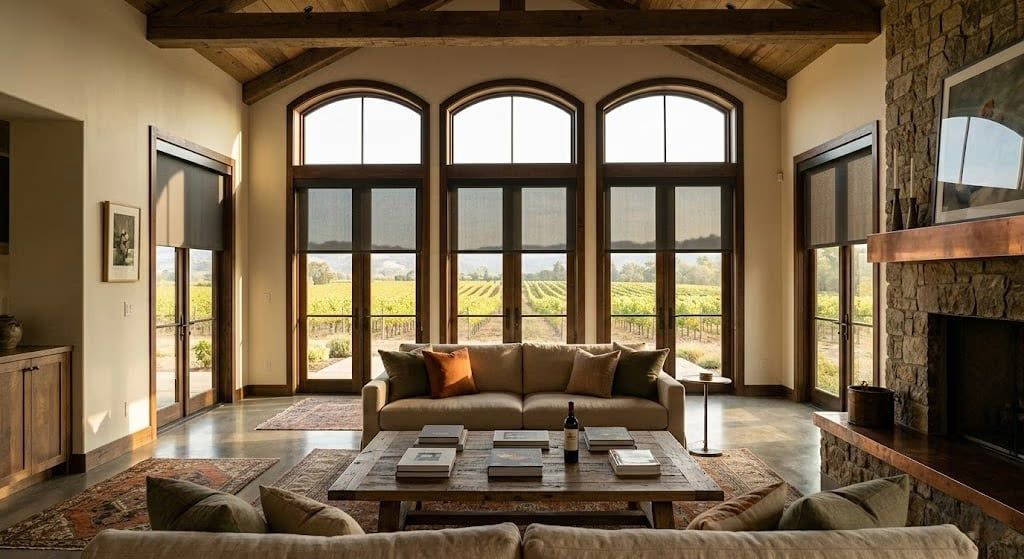
Solar shades with a 1–3% openness factor block up to 99% of harmful UV radiation while preserving the panoramic vineyard views that define Dry Creek Valley AVA living. These performance fabrics deliver critical wine collection preservation for estates near Preston Family Winery and throughout the appellation, reducing glare and heat gain in west-facing tasting rooms by up to 45% without darkening rooms. Combined with motorized scheduling, shades deploy automatically during peak UV hours to maintain a clear visual connection to the landscape while protecting hardwood floors, fine art, wine cellars, and designer furnishings from accelerated fading.
For comprehensive protection in Dry Creek Valley estates, Discount Best Blinds and Shutters recommends dual-shade systems that pair a light-filtering solar shade for daytime view preservation with a room-darkening shade for peak sun hours and evening privacy. When combined with triple-cell honeycomb shades delivering R-values up to 7.0, these systems provide exceptional thermal insulation that reduces cooling costs by up to 40% during Sonoma County's warm harvest season months. Every consultation includes a UV exposure assessment for each window orientation, ensuring the right protection level is specified for south-facing great rooms, west-facing tasting rooms, and every other exposure in the home.
Why Do Dry Creek Valley Homes Need Specialized Window Treatments?
Dry Creek Valley presents a unique combination of environmental factors that standard window treatments cannot adequately address. The valley's north-south orientation exposes west-facing rooms to intense afternoon sun from spring through fall, while large glass surfaces designed to showcase vineyard panoramas act as solar collectors that drive interior temperatures well above comfort levels during harvest season.
Intense Western Sun Exposure
West-facing windows in Dry Creek Valley receive direct afternoon sun from approximately 1:00 PM through sunset, generating significant heat gain and UV exposure. Solar shades with metallic-backed fabrics reject solar heat at the glass while maintaining outward visibility, reducing the load on HVAC systems and protecting interiors simultaneously.
Protecting Floors and Collections
Wide-plank hardwood floors, museum-quality art, and personal wine collections are standard in Dry Creek Valley estates. UV radiation causes irreversible fading in wood, textiles, and artwork within months of unprotected exposure. Discount Best Blinds and Shutters specifies UV-blocking fabrics and art protection systems tested to block 95–99% of ultraviolet radiation for every sun-exposed room.
Harvest Season Heat Management
Dry Creek Valley temperatures regularly exceed 100°F during August and September harvest season. Automated PowerView motorized shades can be programmed to deploy automatically as the sun moves across the valley, reducing solar heat gain before rooms overheat while reopening as the sun passes to preserve views.
Vineyard Home Aesthetics
Dry Creek Valley interiors typically feature natural materials - reclaimed wood, stone, wrought iron, and earth-toned palettes that reflect the surrounding landscape. Discount Best Blinds and Shutters curates fabric selections in warm neutrals, natural linens, and woven textures that complement wine country design sensibilities while delivering commercial-grade UV and thermal performance.
The Dry Creek Valley Landscape
Dry Creek Valley's north-south orientation creates dramatically different sun exposure on each side of the valley. Eastern hillside properties receive intense morning sun while western benchland estates along West Dry Creek Road absorb punishing afternoon heat - a distinction that fundamentally shapes window treatment strategy for every home in the appellation. The valley runs from Lake Sonoma at its northern end to Lytton Springs Road at its southern entrance, with Dry Creek Road tracing the eastern edge and West Dry Creek Road the western side, connected by Lambert Bridge Road at mid-valley.
Classified as a Region II climate - comparable to Bordeaux - Dry Creek Valley warms earlier than almost any other area in Sonoma County, with summer days regularly reaching the mid-80s°F and a 230–270 day frost-free growing season. The valley receives approximately 40 inches of annual rainfall, but June through September is virtually dry. Fog arrives from the south through a coastal mountain conduit, dropping nighttime temperatures dramatically before burning off by 9:30–10 AM - a rapid transition from gray overcast to bright sun that demands adaptable window treatments capable of responding in real time.
This unique fog-to-sun cycle, combined with the east-west exposure imbalance across the valley, makes automated motorized shade scheduling essential for Dry Creek Valley homes. Rather than relying on manual adjustment as conditions change throughout the morning, sun-tracking automation deploys and retracts shades progressively based on actual light levels - protecting interiors during peak exposure while maximizing vineyard views during cooler periods. For homes along circadian wellness principles, this natural light management also supports healthy sleep-wake cycles year-round.
Architectural Heritage of Dry Creek Valley
Grapes have been planted in Dry Creek Valley since 1868, when Swedish immigrant Svente Parker Hallagren established the first vines. By 1900, the valley supported nine wineries and 883 vineyard acres, making it one of California's most prominent Zinfandel-producing regions. That deep agricultural history left behind a layered architectural landscape, with homes spanning Greek Revival and Italianate farmhouses from the 1840–1885 era through Craftsman and Bungalow residences that peaked between 1906 and 1916, mid-century Ranch-style properties, and the modern custom estates built during the valley's revival from the 1970s onward.
Greek Revival and Italianate Farmhouses
The valley's oldest homes feature tall, narrow windows with elaborate surrounds, high ceilings, and deep-set sills characteristic of mid-19th-century construction. Custom-templated plantation shutters follow the precise geometry of these historic windows without concealing the woodwork details that define their character, providing UV protection and light control that respects the original architecture.
Craftsman and Bungalow Homes
Craftsman residences in Dry Creek Valley typically feature grouped windows with wide trim, built-in cabinetry below sills, and distinctive horizontal proportions. These homes require window treatments that work within existing woodwork rather than covering it. Inside-mount Silhouette Window Shadings with adjustable fabric vanes are ideal, fitting cleanly within the window frame while offering precise light control.
Modern and Contemporary Estates
Contemporary vineyard estates built since the 1990s feature oversized picture windows, floor-to-ceiling glass walls, and expansive sliding door systems designed to frame panoramic vineyard and mountain views. These homes, often 2,500–6,000+ square feet with guest houses and entertaining spaces, require architectural glass solutions and motorized shade systems that span large openings while maintaining clean sight lines.
Ranch-Style and Agricultural Properties
Many Dry Creek Valley properties retain their ranch-style character with wide, low-slung window configurations, covered porches, and outbuildings including barns, workshops, and guest houses. These homes benefit from layered custom drapery systems that pair sheer light-filtering panels with heavier thermal drapes for energy efficiency across the valley's wide temperature swings, complementing the warm, earth-toned palettes typical of agricultural wine country interiors.
Protecting Wine Country Collections
Dry Creek Valley estates house significant investments beyond the vineyards themselves. Personal wine collections, wide-plank hardwood floors, museum-quality art, and period furnishings in homes near landmarks like Preston Family Winery, Ferrari-Carano's Villa Fiore tasting room, and A. Rafanelli's allocation-only winery all face the same threat: ultraviolet radiation that causes irreversible fading, degradation, and material breakdown within months of unprotected exposure.
UV damage to wine extends beyond label fading. Ultraviolet exposure accelerates chemical reactions in wine that alter flavor profiles, degrade tannin structure, and compromise bottle integrity - a particular concern in the valley's many home tasting rooms and display cellars where bottles are stored behind glass or showcased for guests. Research from UC Davis Viticulture and Enology documents how light and temperature exposure directly impacts wine chemistry and aging. With over 70 resident wineries and 160+ labels produced from Dry Creek Valley fruit, protecting these collections is essential for estate owners who view their wine as both a passion and an investment.
Discount Best Blinds and Shutters approaches these challenges through what we call UV Conservation Engineering - a systematic methodology for specifying the precise solar fabric openness factor, motorized deployment schedule, and dual-shade architecture required for each room based on its orientation, contents, and glass exposure. For multimillion-dollar Westside Road estates housing fine art collections, we specify 1% openness factor solar fabrics as essential - the tightest weave commercially available - which block 99% of damaging UV rays while maintaining view transparency through the fabric. This critical 1% threshold ensures that vineyard panoramas remain visible from interior spaces even as the fabric intercepts virtually all ultraviolet radiation that would otherwise degrade oils, watercolors, photographs, and mixed-media works within months of unprotected exposure.
Wine cellar glass walls present a particular UV Conservation Engineering challenge in Dry Creek Valley estates. Display cellars with floor-to-ceiling glass fronts - increasingly standard in properties along West Dry Creek Road and Westside Road - expose bottles, labels, and cork integrity to direct and reflected ultraviolet radiation throughout the day. Discount Best Blinds and Shutters specifies UV-blocking solar fabrics at the 1% openness factor for these glass walls, paired with room-darkening panels in dual-shade configurations that provide complete light exclusion during peak UV hours. For tasting rooms and great rooms adjacent to cellar displays, motorized scheduling deploys protection automatically as the sun tracks across the valley - critical for properties along Dry Creek Road and West Dry Creek Road where tasting room visitor traffic also creates privacy considerations that window treatments address simultaneously.
What Dry Creek Valley Estate Owners Say
“
Our west-facing tasting room was unusable after 2 PM during summer. Phil installed solar shades that cut the heat dramatically while keeping the vineyard views completely intact. We can finally use that room all day during harvest season.
- Dry Creek Valley Estate Owner
“
We were losing our hardwood floors to UV damage and didn't want to block the views we built the house for. Phil understood exactly what we needed - the solar shades protect everything while the vineyard panorama looks just as beautiful as before.
- Vineyard Property Owner
“
The UV protection for our art collection was the priority, but Phil also recommended motorized shades on a sun-tracking schedule. The system adjusts automatically throughout the day and our energy bills dropped noticeably that first summer.
- Dry Creek Valley Estate Owner
Recent Projects in Dry Creek Valley
Documented installations from this neighborhood: see the architectural decisions, materials specified, and outcomes.
View Case Study →What Dry Creek Valley Estate Owners Ask About Window Treatments
What window treatments protect wine collections from UV damage?
Solar shades with a 1-3% openness factor block up to 99% of UV radiation while preserving vineyard views. For wine cellars and tasting rooms throughout Dry Creek Valley, we recommend dual-shade systems pairing a UV-filtering solar shade with a room-darkening shade for complete light control. Motorized scheduling can deploy shades automatically during peak UV hours, protecting bottles, labels, and cork integrity without requiring manual adjustment.
How do you handle the fog-to-sun transition in Dry Creek Valley?
Dry Creek Valley fog typically burns off by 9:30-10 AM, creating a rapid transition from gray overcast to intense sun. PowerView motorized shades with sun-tracking automation handle this seamlessly by deploying shades progressively as light levels increase, rather than requiring a manual response. Silhouette Window Shadings are especially effective here because their adjustable fabric vanes allow incremental light control as conditions change throughout the morning.
What window treatments work for historic Craftsman homes in Dry Creek Valley?
Craftsman and Bungalow-style homes (peak construction 1906-1916) in Dry Creek Valley typically feature tall, narrow, grouped windows with distinctive woodwork surrounds. Plantation shutters with custom-templated frames follow the exact window geometry without covering trim details. For Italianate and Greek Revival farmhouses with even taller windows, custom drapery with motorized tracks provides full coverage while respecting the architectural proportions of these historic properties.
Can motorized shades be programmed for Dry Creek Valley's extreme temperature swings?
Yes. Dry Creek Valley experiences significant diurnal temperature variation, with summer days reaching the mid-80s and nighttime temperatures dropping dramatically when fog arrives through the southern mountain conduit. PowerView motorized shades can be programmed with separate schedules for east-facing windows (morning sun protection) and west-facing windows (afternoon heat management), automatically adjusting as temperatures swing. Integration with home automation systems adds temperature sensor triggers for even more responsive climate control across 2,500-6,000+ square foot estates.
Related Neighborhoods, Products and Solutions
The Mill District
Motorized shades for Olson Kundig contemporary residences.
Johnson Street Historic District
Custom plantation shutters for Victorian and Craftsman residences.
Healdsburg
Full luxury window treatment services across all Healdsburg neighborhoods.
Energy Efficiency
UV protection and thermal insulation for wine country interiors.
Cellular and Honeycomb Shades
Energy-efficient shades with R-values up to 7.0 for vineyard estates.
UV and Art Protection
Preserve hardwood floors, fine art, and wine collections from UV fading.
Smart Home Automation
PowerView motorization with sun-tracking schedules for wine country.
Silhouette Window Shadings
Adjustable fabric vanes for Craftsman homes and fog-to-sun light transitions.
Plantation Shutters
Custom-templated shutters for historic Italianate and Craftsman homes.
Custom Drapery
Layered drapery systems for ranch-style and agricultural estate properties.
Circadian Wellness
Natural light management aligned with Dry Creek Valley's fog-to-sun cycle.
Architectural Glass Solutions
Oversized window and floor-to-ceiling glass treatments for modern estates.
Dry Creek Valley's Window Treatment Experts
From solar shades that preserve vineyard views to dual-shade systems that protect art collections and reduce energy costs, Phil D. Skikos brings the full Hunter Douglas luxury collection to your Dry Creek Valley estate for a complimentary design consultation. See materials in your own lighting and receive expert recommendations tailored to the specific sun exposure of your home or commercial property.