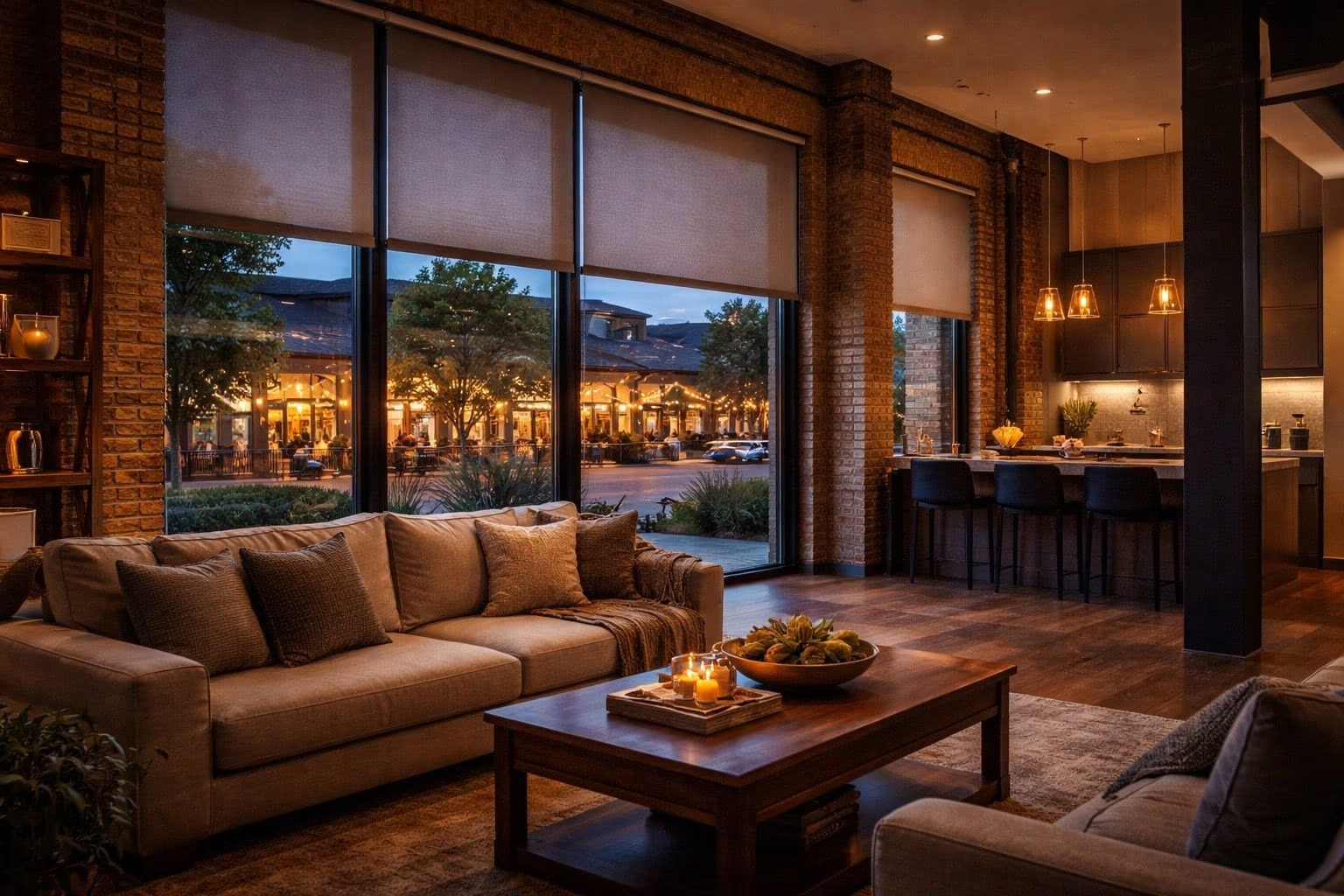
Office and Studio Window Treatments - Title 24 ADR Compliance and Circadian Productivity
Commercial offices and creative studios require window treatments that satisfy California’s Title 24 ADR 2.0b automated demand response mandate while optimizing natural light for employee productivity. Non-compliance carries penalties of up to $2,000 per day under the 2026 Energy Code. Discount Best Blinds and Shutters specifies OpenADR-certified automated shading with circadian scheduling that modulates daylight throughout the workday, reducing glare on screens while maintaining the melanopic lux levels that drive alertness and focus across Windsor, Healdsburg, and Sonoma County.
Why Do Commercial Offices Need Specialized Window Treatments?
Standard blinds and manual shades leave commercial offices exposed to Title 24 non-compliance penalties, uncontrolled glare that degrades screen work, and HVAC loads that spike whenever direct sun hits unshaded glass. These are interconnected problems that demand an integrated, automated solution.
California’s 2026 Energy Code requires commercial buildings above 10,000 square feet to incorporate automated demand response capabilities, and window shading is a primary compliance pathway. Buildings that fail to meet Title 24 ADR 2.0b face penalties of up to $2,000 per day, a cost that accumulates rapidly and far exceeds the investment in compliant shading. Beyond code compliance, unshaded commercial glazing transmits solar heat gain that increases per-room cooling costs by 30% or more on west-facing exposures, while direct glare on monitors forces employees to close blinds entirely, eliminating the natural daylight connection that circadian science identifies as essential for sustained alertness and cognitive performance. Creative studios face the additional challenge of color-accurate lighting: uncontrolled daylight shifts color temperature throughout the day, compromising design work that requires consistent illumination.
Recommended Products for Offices and Studios
Designer Solar Shades - 1% Openness for Screen-Intensive Work
Solar shades with 1% openness fabric deliver maximum glare reduction for screen-intensive office environments, blocking 99% of direct visible light while preserving the faint exterior connection that maintains daylight awareness. The tight weave achieves an SHGC of 0.17, reducing solar heat gain through glazing by 83% and lowering per-room cooling costs without requiring employees to work in artificial darkness. For creative studios where color accuracy matters, the neutral gray fabric options maintain consistent color temperature throughout the day, eliminating the warm-to-cool shifts that compromise design work on calibrated monitors.
PowerView Gen 3 with BACnet - Automated Demand Response
PowerView Gen 3 with BACnet integration provides the automated demand response capability required for Title 24 ADR 2.0b compliance. When the utility issues a demand response signal, the building management system triggers automated shade deployment to reduce solar heat gain, satisfying the load-shedding requirement without manual intervention. OpenADR 2.0b Virtual End Node certification ensures the system passes building inspection and avoids the $2,000/day non-compliance penalty. Circadian scheduling layers on top of the ADR protocol, automatically adjusting shade positions throughout the workday to optimize melanopic lux levels for employee alertness and productivity.
Duette® Architella® Honeycomb Shades - R-7.0 HVAC Load Reduction
Duette Architella double-cell construction delivers R-values up to 7.0 with a U-factor of 0.23, providing the thermal insulation that reduces per-room cooling costs on sun-exposed office glazing. The cellular air pockets create a thermal buffer between the glass and the interior, reducing the HVAC load that spikes when direct sun hits unshaded west and south-facing windows. For offices where acoustic privacy matters, Architella’s NRC rating of 0.20 to 0.35 absorbs mid-frequency sound reflections that cause speech intelligibility problems in glass-walled conference rooms and open-plan creative studios.
Designer’s Note
Title 24 ADR Compliance Through Intelligent Shade Automation
OpenADR 2.0b VEN certificationis the technical standard that separates compliant automated shading from standard motorized blinds. A certified system registers as a Virtual End Node on the utility’s demand response network, receiving event signals directly and executing pre-programmed shade deployment sequences without building manager intervention. Our commercial installations pair this ADR protocol layer with circadian rhythm science, targeting melanopic lux levels above 250 in morning hours to activate cortisol-driven alertness and reducing blue-light-dominant direct sun in the afternoon to prevent the circadian disruption that causes mid-afternoon productivity crashes.
Healdsburg’s Mill District co-working spaces and creative studios represent the intersection of these requirements: Title 24 compliance mandates automated demand response capability, while the knowledge workers and designers occupying these spaces demand glare-free screen environments with the daylight connection that supports sustained focus. The $2,000/day non-compliance penalty under the 2026 Energy Code transforms shade automation from a comfort amenity into a financial imperative. Discount Best Blinds and Shutters specifies BACnet-integrated PowerView Gen 3 for all commercial installations because it satisfies both the code requirement and the circadian wellness objective in a single system, with integration available for buildings that require RadioRA 3 or Ketra tunable lighting coordination. Studios throughout Sonoma County increasingly demand this dual-purpose approach, recognizing that the same automation infrastructure that avoids code penalties also delivers measurable productivity gains through optimized natural light exposure.
Office and Studio Performance Specifications
| Feature | Value | Notes |
|---|---|---|
| ADR Compliance | Title 24 2.0b ready | Automated demand response for commercial buildings |
| Openness Factor | 1% | Maximum glare reduction for screen-intensive work |
| SHGC | 0.17 | Solar heat gain coefficient reduces HVAC load |
| Circadian Support | Scheduled automation | Blue-light modulation throughout workday |
| Integration | BACnet · · PowerView | Building management system compatible |
| Penalty Avoidance | $2,000/day | Title 24 non-compliance penalty (2026 code) |
Office and Studio Window Treatment Questions Answered
What is Title 24 ADR 2.0b and how do automated shades satisfy it?
Title 24 ADR 2.0b refers to California’s Automated Demand Response requirement under the 2026 Energy Code, which mandates that commercial buildings above 10,000 square feet incorporate automated load-shedding capabilities triggered by utility demand response events. Motorized window shades with OpenADR 2.0b Virtual End Node (VEN) certification satisfy this requirement by automatically deploying to reduce solar heat gain when the utility issues a demand response signal. Hunter Douglas PowerView Gen 3 with BACnet integration connects directly to building management systems, enabling the shades to respond to ADR events without manual intervention. Discount Best Blinds and Shutters specifies OpenADR-certified shade systems for all commercial office installations in Sonoma County to ensure full Title 24 ADR compliance.
How can offices avoid the $2,000/day Title 24 non-compliance penalty?
The 2026 California Energy Code imposes penalties of up to $2,000 per day for commercial buildings that fail to meet Title 24 automated demand response requirements. Offices can avoid this penalty by installing OpenADR 2.0b certified automated shading systems that respond to utility demand response events. The shade system must be integrated with the building management system via BACnet or a comparable protocol, and must demonstrate automated deployment during DR events. Discount Best Blinds and Shutters provides full documentation of OpenADR VEN certification and BACnet integration for building inspectors, ensuring that the shading installation satisfies the code requirement at time of inspection and throughout the life of the system.
How do 1% openness solar screens reduce monitor glare while maintaining daylight?
Solar screen fabrics with 1% openness factor transmit only 1% of visible light through the weave, reducing direct glare on computer monitors and screens to levels that eliminate the need for employees to close blinds entirely or reposition desks. Despite blocking 99% of direct light, the tight weave preserves a faint visual connection to the exterior, maintaining the daylight awareness that circadian research identifies as critical for alertness and mood regulation. The 1% openness specification also achieves an SHGC of 0.17, reducing solar heat gain through glazing by 83% and lowering per-room HVAC cooling costs. Discount Best Blinds and Shutters specifies 1% openness fabrics for all screen-intensive office environments where glare control and daylight connection must coexist.
How does circadian shade scheduling improve employee productivity?
Circadian shade scheduling automates shade positions throughout the workday to modulate the spectrum and intensity of natural light entering the workspace, supporting the body’s biological clock. Morning schedules allow maximum daylight ingress to deliver melanopic lux levels above 250, which research associates with cortisol activation and sustained alertness. Afternoon schedules partially deploy shades to reduce blue-light-dominant direct sun, preventing the circadian disruption that causes mid-afternoon fatigue. Late-day schedules lower shades further to allow warm, low-angle light that signals the transition toward evening rest. Studies published in the Journal of Clinical Sleep Medicine demonstrate that workers in daylight-optimized offices report 46 minutes more sleep per night and 56% fewer headaches compared to windowless or improperly shaded environments.
Related Products and Solutions
Achieve Title 24 Compliance and Boost Productivity
Book a free consultation and Phil will assess your office or studio for Title 24 ADR compliance, glare reduction, and circadian light optimization with specification-grade fabric samples. We serve Windsor, Healdsburg, Santa Rosa, and all of Sonoma County.