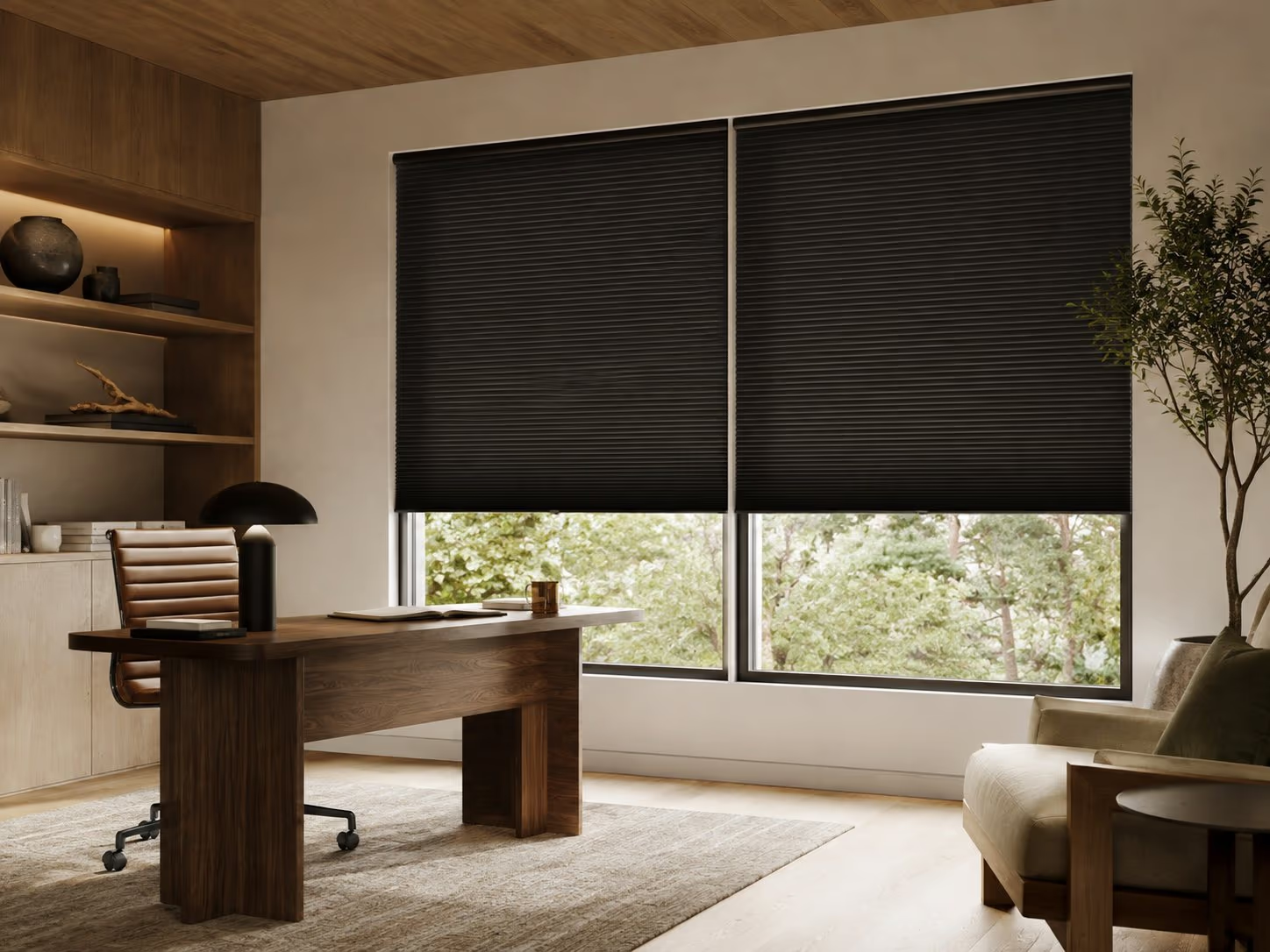
Energy-Efficient Cellular Shades
Duette® Honeycomb Shades
A soft fabric shade that also puts an insulating layer at the glass. The pleats form air pockets between the room and the window while the front stays clean and understated.
Discount Best Blinds and Shutters measures and installs Hunter Douglas Duette® cellular shades throughout Santa Rosa and Sonoma County. We compare cell construction, fabric opacity, operating direction and motorization at the windows you are actually covering, so the finished shade is chosen for the room rather than off a specification sheet.
Get a Free Quote
Duette® Honeycomb Shades for Sonoma County Homes
Viewed from the side, a cellular shade forms a series of fabric pockets. Those pockets hold air between the glass and the room, adding resistance to heat moving through the window. The difference is most noticeable on older windows, large exposures and rooms that take strong afternoon sun. How much benefit you get depends on the window, the cell construction, the fabric and how the shade is actually used, so rather than promising a fixed reduction on your utility bill we look at whether the room has a real heat-loss or heat-gain problem and which configuration suits it.
Pleats come in three-quarter-inch and one-and-a-quarter-inch sizes, and the cell does more than insulate: the same trapped air absorbs sound, which is why a Duette noticeably softens a room with hard floors or a lot of glass. Many of the fabrics are made from over 50 percent recycled content. Duette comes in a range of cell sizes, fabrics and operating systems, which means two Duette shades can perform very differently. A living room often does better with a light-filtering fabric that softens glare while keeping the space bright. A bedroom usually needs stronger privacy or a room-darkening fabric. Top-down/bottom-up operation is worth understanding before you choose, because it is the feature that solves the most common problem people have with a street-facing room. The shade is hung so it can be lowered from the top of the window as well as raised from the bottom, which means daylight comes in over the top while the lower half of the glass stays covered. You are not choosing between light and privacy; you are placing the covered band where the privacy problem actually is. It is available on Duette and on [Applause](/products/applause-cellular-shades), and not on every shade in the catalog, so we confirm it for the specific product before it is ordered. Street-facing rooms benefit most, and Duolite® goes further by hanging a light-filtering and a room-darkening fabric on one headrail so a single window covers both jobs. ClearView® sheers are available where keeping the outward view matters most. Single-cell keeps the profile lighter and the stack compact, and is enough where the insulation demand is moderate. Multi-cell adds more trapped air and is worth considering on large west-facing windows, older glass, or rooms with persistent temperature swings. More insulation is not automatically right for every opening, so we weigh construction against window size, exposure, fabric and budget rather than selling performance the room does not need.
Get a Free QuoteFAQ
Frequently Asked Questions
Yes. The cellular structure traps air at the window and improves thermal comfort compared with leaving the glass uncovered. The effect varies by construction and by the condition of the window, so we select the shade around the exposure rather than applying one performance number to every room.
Yes. The terms are used interchangeably for pleated fabric shades that form cell-shaped air pockets when viewed from the side.
Many Duette configurations are compatible with Hunter Douglas PowerView automation. The exact option depends on shade size, fabric and configuration, so motorization is confirmed with the final product selection.
Routine care is light dusting or gentle vacuuming with a soft brush attachment. Spot-cleaning instructions vary by fabric. Avoid soaking the shade or using aggressive methods that can distort the pleated cell structure, and follow the manufacturer care instructions for the fabric you chose.