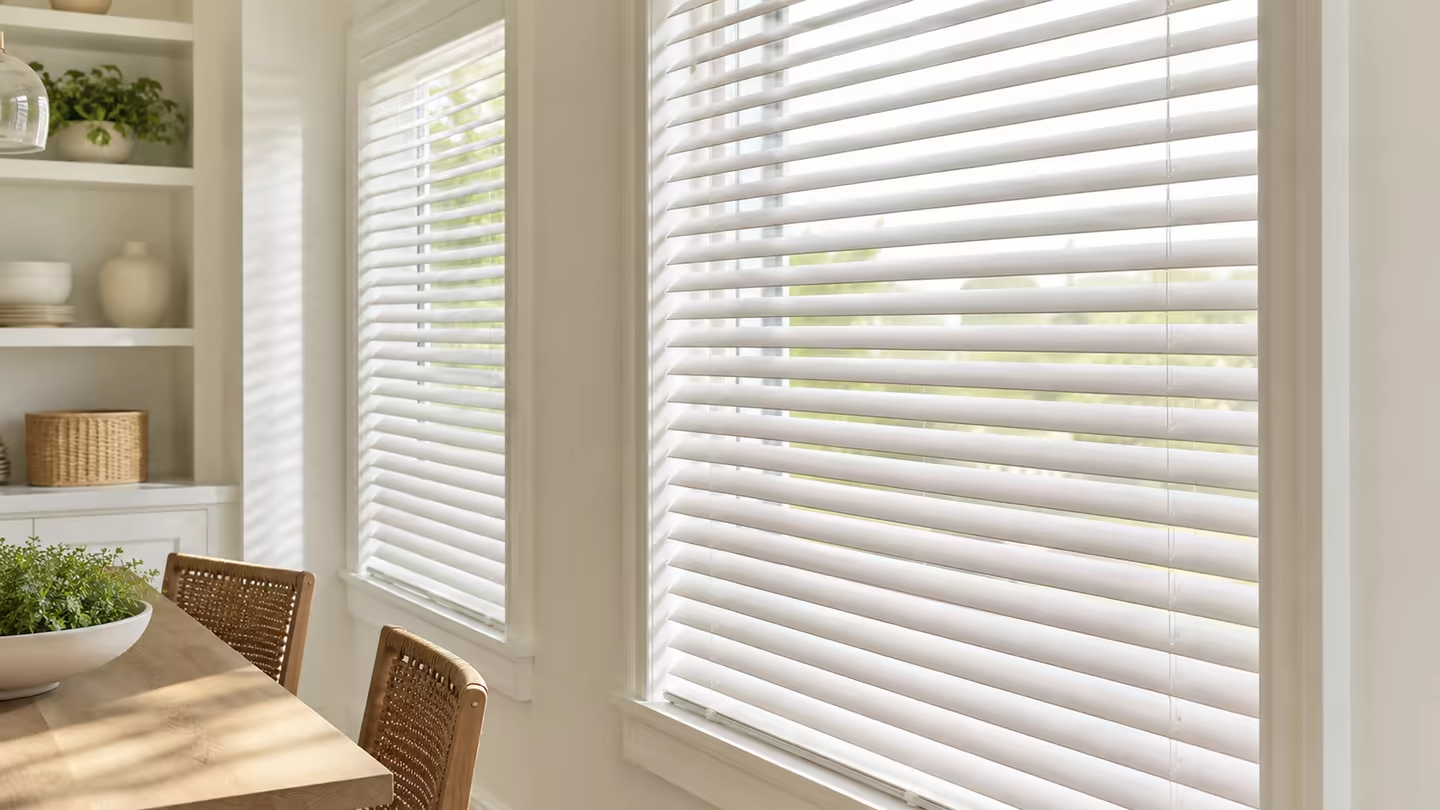
Fabric Blinds
Aria® Fabric Blinds
Horizontal fabric vanes in place of rigid slats. You keep the familiar horizontal rhythm and tilt-based light control of a blind, but the window reads as textile rather than hardware, and the format is built to work on larger openings.
Discount Best Blinds and Shutters brings Aria samples to Santa Rosa and Sonoma County homes so you can feel the fabric, see how the vanes overlap and compare the product against hard-slat blinds or sheer shadings. We measure the opening and review the manual and PowerView operating choices before ordering.
Get a Free Quote
Aria® Fabric Blinds for Sonoma County Homes
The difference is the vane material. A traditional blind relies on rigid slats that tilt to redirect light; Aria replaces them with lightweight fabric vanes, which changes both the feel of the product and the way daylight moves through it. Open the vanes and the fabric softens incoming light; close them and the overlapping layers give stronger privacy and darkening. That makes Aria worth a look when you like the visual order of a blind but not the hardness of vinyl or aluminum, and it is worth setting it beside [Silhouette shadings](/products/silhouette-window-shadings), because both use fabric to soften light and they land in very different places visually.
Vane position is how you change the room. Tilted one way, more light passes through the translucent material for a softer daytime effect; moved toward closed, the overlap increases privacy and darkens the room without adding a rear shade. How dark it actually goes depends on fabric, fit and the light gaps at the edges, so we would not call any configuration true blackout unless the manufacturer rates it that way; for a bedroom or media room we compare the real room-darkening requirement against cellular or roller options first. Against hard-slat blinds the decision is not that one is better: those still win on durability and crisp tilt control, while Aria wins on softness and less visual weight. Window width, privacy, maintenance, moisture and how much the treatment gets handled decide it, and seeing the materials side by side usually settles it.
Get a Free QuoteFAQ
Frequently Asked Questions
Instead of bouncing light off an opaque slat, Aria uses translucent fabric vanes to soften daylight in the more open positions. As the vanes overlap, privacy and darkening increase. The transition between bright and closed is gentler, though the exact performance depends on the fabric and the fit.
Aria is designed to cover larger openings than many traditional hard-slat blinds, but every window still has to be checked against current manufacturer size limits. We measure width and height, review mounting depth and confirm the operating system is approved for that exact configuration before an order goes in.
Aria uses a dedicated tilt control rather than the twist-and-pull motion of many older blinds, which makes daily adjustment simpler on larger treatments. If you would rather not handle it at all, compatible configurations can be specified with PowerView automation.
Yes, PowerView is among the operating choices along with manual options. We verify compatibility for the final width, height and fabric. Motorization is worth it when several blinds are grouped together, or when the window is large enough that adjusting it by hand every day becomes a chore.